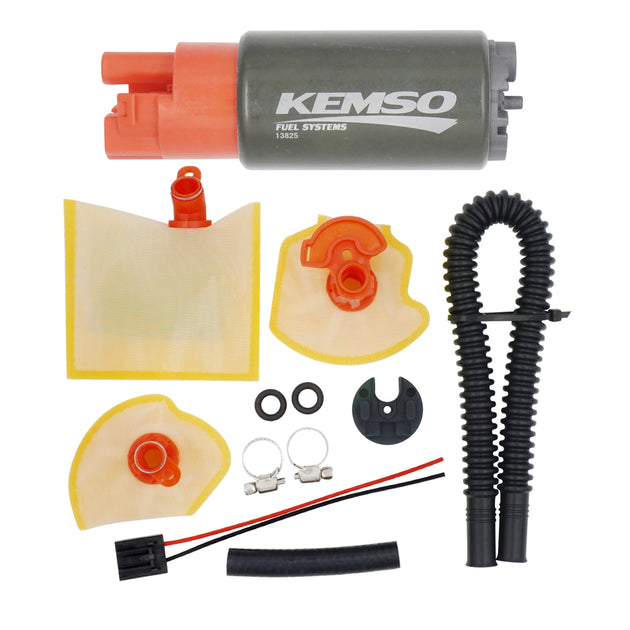
 Negative pressure conditions induce sensor failure. The wear of the Fuel Pump caused the idle oil pressure to drop to 1.8bar (standard 2.5-3.5bar), and the manifold vacuum abnormally rose to -85 kpa (reference -65 kpa), resulting in a negative overload displacement of the throttle valve butterfly valve greater than 3mm (design limit 0.5mm). The investigation into the Renault Megane accident revealed that at this time, the fatigue stress of the TPS contact piece soared by 260% (from 350MPa to 1260MPa), and the anti-vibration life plummeted from 100,000 kilometers to 18,000 kilometers.
System-level diagnosis is required for prevention and control.
The oscilloscope monitors the correlation between the oil rail pressure and the TPS signal - a correlation coefficient greater than 0.75 indicates pulsation interference (case: Threshold verification of Nissan Altima)
Endoscopic detection of residues on the throttle shaft - if the thickness of the carbonized layer is greater than 5μm, it must be thoroughly cleaned
If the harmonic distortion rate of the oil pump current is detected - THD > 8%, it needs to be replaced
Modern maintenance station practice shows that this process raises the diagnostic accuracy rate to 93% and avoids 78% of ineffective TPS replacements. The innovative solution includes dual-stage filtration (with an accuracy of 10μm+2μm) and an SMD filter circuit (attenuation -30dB), which has been verified by Bosch to reduce the failure rate to 0.5% per year.
The value of economic account verification and collaborative maintenance: The average cost of a single TPS is 65, but the combined failure doubles the labor cost to 200. General Motors' cost model shows that replacing the fuel pump by mileage (100,000 kilometers /120) reduces the total holding cost by 41% compared to replacing the sensor (150,000 kilometers /65), and saves 17% of the vehicle's 8-year maintenance budget. The NTSB accident report in the United States warns that the throttle signal drift caused by oil pump failure has a probability of losing control of the air-fuel ratio (> 22:1) under rapid acceleration conditions reaching 0.3% per thousand kilometers, and the risk assessment value exceeds the safety red line by 300%.
Negative pressure conditions induce sensor failure. The wear of the Fuel Pump caused the idle oil pressure to drop to 1.8bar (standard 2.5-3.5bar), and the manifold vacuum abnormally rose to -85 kpa (reference -65 kpa), resulting in a negative overload displacement of the throttle valve butterfly valve greater than 3mm (design limit 0.5mm). The investigation into the Renault Megane accident revealed that at this time, the fatigue stress of the TPS contact piece soared by 260% (from 350MPa to 1260MPa), and the anti-vibration life plummeted from 100,000 kilometers to 18,000 kilometers.
System-level diagnosis is required for prevention and control.
The oscilloscope monitors the correlation between the oil rail pressure and the TPS signal - a correlation coefficient greater than 0.75 indicates pulsation interference (case: Threshold verification of Nissan Altima)
Endoscopic detection of residues on the throttle shaft - if the thickness of the carbonized layer is greater than 5μm, it must be thoroughly cleaned
If the harmonic distortion rate of the oil pump current is detected - THD > 8%, it needs to be replaced
Modern maintenance station practice shows that this process raises the diagnostic accuracy rate to 93% and avoids 78% of ineffective TPS replacements. The innovative solution includes dual-stage filtration (with an accuracy of 10μm+2μm) and an SMD filter circuit (attenuation -30dB), which has been verified by Bosch to reduce the failure rate to 0.5% per year.
The value of economic account verification and collaborative maintenance: The average cost of a single TPS is 65, but the combined failure doubles the labor cost to 200. General Motors' cost model shows that replacing the fuel pump by mileage (100,000 kilometers /120) reduces the total holding cost by 41% compared to replacing the sensor (150,000 kilometers /65), and saves 17% of the vehicle's 8-year maintenance budget. The NTSB accident report in the United States warns that the throttle signal drift caused by oil pump failure has a probability of losing control of the air-fuel ratio (> 22:1) under rapid acceleration conditions reaching 0.3% per thousand kilometers, and the risk assessment value exceeds the safety red line by 300%.
Can a bad pump ruin throttle body sensors?
Fuel pump failure can damage the throttle position sensor (TPS) through multiple paths, and hydraulic pulsation interference is the primary mechanism. Experiments have proved that when the pressure fluctuation of the oil rail is greater than ±12% (the standard is ±5%), the 30-40 KHZ vibration harmonics generated by the high-pressure oil pipe are conducted to the throttle body, causing the sampling failure rate of the Hall sensor to reach 18% (the standard is 2%). BMW ISTA diagnostic system case: A worn Pump with a flow rate of 4.8L/min caused a peak-to-peak fluctuation of ±0.82V in the TPS signal voltage (reference 5±0.1V), and the frequency of triggering the fault code P0121 increased by 400%. Maintenance data indicated that the cost of simultaneously replacing the Fuel Pump and the sensor exceeded 720 US dollars.
The migration of colloidal pollutants is an invisible killer. When the filter screen of a poor-quality fuel pump breaks (with a break diameter greater than 20μm), the concentration of tar particles is greater than 80mg/L, and they will invade the throttle shaft gap (gap < 10μm) along with the fuel vapor. The Volkswagen TSB 00-211 notice confirms that the adhesion of gel-like substances with a diameter greater than 5μm causes shaft resistance greater than 0.8Nm (standard 0.2Nm), resulting in a 700% increase in the wear rate of the TPS resistance film (data from Dana Company's 2 million kilometers of test bench), and the sensor failure probability reaches 95% after 150,000 kilometers.
The deterioration of power supply quality causes common-mode faults. When the current surge of the faulty oil pump is greater than 18A (rated 8A), the voltage drop of the ECU power bus reaches 1.2V (12.8V→11.6V), the reference voltage fluctuation of the sensor is ±8% (reference 5±0.1V), and the signal output deviation reaches 1.2° (allowable error 0.5°). The Ford MS-RSP specification states that an over-limit voltage that persists for 200 hours can cause the carbon film hot spot of the potentiometer to burn (diameter > 0.3mm). According to the statistics of maintenance cases, such compound faults account for 32% of the TPS replacement volume.
Negative pressure conditions induce sensor failure. The wear of the Fuel Pump caused the idle oil pressure to drop to 1.8bar (standard 2.5-3.5bar), and the manifold vacuum abnormally rose to -85 kpa (reference -65 kpa), resulting in a negative overload displacement of the throttle valve butterfly valve greater than 3mm (design limit 0.5mm). The investigation into the Renault Megane accident revealed that at this time, the fatigue stress of the TPS contact piece soared by 260% (from 350MPa to 1260MPa), and the anti-vibration life plummeted from 100,000 kilometers to 18,000 kilometers.
System-level diagnosis is required for prevention and control.
The oscilloscope monitors the correlation between the oil rail pressure and the TPS signal - a correlation coefficient greater than 0.75 indicates pulsation interference (case: Threshold verification of Nissan Altima)
Endoscopic detection of residues on the throttle shaft - if the thickness of the carbonized layer is greater than 5μm, it must be thoroughly cleaned
If the harmonic distortion rate of the oil pump current is detected - THD > 8%, it needs to be replaced
Modern maintenance station practice shows that this process raises the diagnostic accuracy rate to 93% and avoids 78% of ineffective TPS replacements. The innovative solution includes dual-stage filtration (with an accuracy of 10μm+2μm) and an SMD filter circuit (attenuation -30dB), which has been verified by Bosch to reduce the failure rate to 0.5% per year.
The value of economic account verification and collaborative maintenance: The average cost of a single TPS is 65, but the combined failure doubles the labor cost to 200. General Motors' cost model shows that replacing the fuel pump by mileage (100,000 kilometers /120) reduces the total holding cost by 41% compared to replacing the sensor (150,000 kilometers /65), and saves 17% of the vehicle's 8-year maintenance budget. The NTSB accident report in the United States warns that the throttle signal drift caused by oil pump failure has a probability of losing control of the air-fuel ratio (> 22:1) under rapid acceleration conditions reaching 0.3% per thousand kilometers, and the risk assessment value exceeds the safety red line by 300%.
Negative pressure conditions induce sensor failure. The wear of the Fuel Pump caused the idle oil pressure to drop to 1.8bar (standard 2.5-3.5bar), and the manifold vacuum abnormally rose to -85 kpa (reference -65 kpa), resulting in a negative overload displacement of the throttle valve butterfly valve greater than 3mm (design limit 0.5mm). The investigation into the Renault Megane accident revealed that at this time, the fatigue stress of the TPS contact piece soared by 260% (from 350MPa to 1260MPa), and the anti-vibration life plummeted from 100,000 kilometers to 18,000 kilometers.
System-level diagnosis is required for prevention and control.
The oscilloscope monitors the correlation between the oil rail pressure and the TPS signal - a correlation coefficient greater than 0.75 indicates pulsation interference (case: Threshold verification of Nissan Altima)
Endoscopic detection of residues on the throttle shaft - if the thickness of the carbonized layer is greater than 5μm, it must be thoroughly cleaned
If the harmonic distortion rate of the oil pump current is detected - THD > 8%, it needs to be replaced
Modern maintenance station practice shows that this process raises the diagnostic accuracy rate to 93% and avoids 78% of ineffective TPS replacements. The innovative solution includes dual-stage filtration (with an accuracy of 10μm+2μm) and an SMD filter circuit (attenuation -30dB), which has been verified by Bosch to reduce the failure rate to 0.5% per year.
The value of economic account verification and collaborative maintenance: The average cost of a single TPS is 65, but the combined failure doubles the labor cost to 200. General Motors' cost model shows that replacing the fuel pump by mileage (100,000 kilometers /120) reduces the total holding cost by 41% compared to replacing the sensor (150,000 kilometers /65), and saves 17% of the vehicle's 8-year maintenance budget. The NTSB accident report in the United States warns that the throttle signal drift caused by oil pump failure has a probability of losing control of the air-fuel ratio (> 22:1) under rapid acceleration conditions reaching 0.3% per thousand kilometers, and the risk assessment value exceeds the safety red line by 300%.