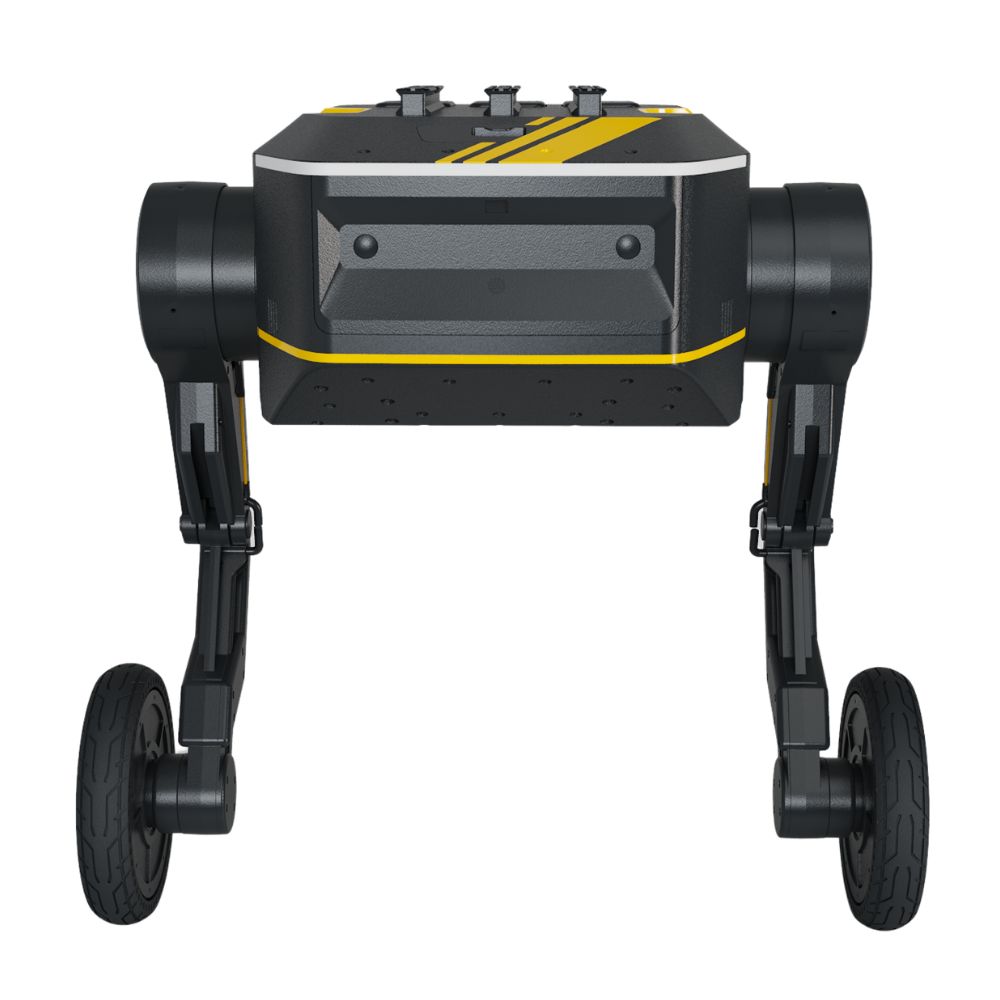
A wheeled robot platform should be evaluated by mobility, payload, runtime, software support, and environmental capability rather than one specification. Research platforms often use payloads of 5–50 kg, battery runtimes from 4–12 hours, and ROS-based systems for development. Field robots usually require larger wheels, stronger frames, and protection ratings such as IP54 or higher. A proper comparison helps teams avoid replacing hardware when research requirements expand.
Compare Mobility Based on Real Operating Conditions
Wheeled robot platforms are designed for different environments. A laboratory robot moving on polished floors has very different requirements from a field robot operating on gravel, grass, slopes, or industrial sites.
Indoor platforms commonly use differential drive or mecanum wheels. Differential drive systems are widely used in research because they provide accurate turning control and simple mechanical structures. Mecanum wheels allow sideways movement but usually have lower efficiency on uneven surfaces.
Outdoor platforms require:
-
Larger wheel diameter
-
Higher ground clearance
-
Better suspension
-
Stronger motor torque
-
Improved traction control
A platform with 100 mm wheels may perform well inside a laboratory, but a robot with 250–400 mm wheels is more suitable for outdoor surfaces where small rocks, gaps, or uneven ground are common.
| Feature | Indoor Research Robot | Outdoor Field Robot |
|---|---|---|
| Wheel size | 100–250 mm | 250–500 mm |
| Ground clearance | 20–80 mm | 100–250 mm |
| Typical speed | 0.5–2 m/s | 1–5 m/s |
| Suspension | Optional | Common requirement |
| Operating surface | Flat floors | Mixed terrain |
Wheel size affects obstacle handling because larger wheels reduce the impact of surface changes. A 300 mm wheel can generally pass obstacles that would stop a much smaller wheel, especially when combined with suspension travel.
Mobility performance also depends on weight distribution. A robot carrying a 30 kg sensor package with a high center of gravity may lose traction during slope operation even if the motors provide enough power.
A robot platform should be tested with the final sensor package installed, because empty chassis performance does not represent real operating conditions.
Evaluate Payload Capacity and Frame Design
Payload capacity is one of the first specifications researchers compare, but the number alone does not describe actual capability.
A robot rated for 40 kg payload may not perform well if the weight is mounted too high or too far from the center of the chassis. Stability during acceleration, braking, and turning depends on the frame structure and weight distribution.
Typical payload ranges:
| Application | Payload Range |
|---|---|
| Educational research robots | 2–10 kg |
| Autonomous navigation research | 10–30 kg |
| Inspection robots | 20–80 kg |
| Industrial mobile platforms | 50 kg or more |
Many research projects begin with cameras and LiDAR sensors, then add additional equipment later. A platform purchased with only 10% extra payload capacity may become unsuitable after adding computing units, batteries, or robotic arms.
Frame materials also influence performance:
-
Aluminum alloy reduces weight and improves portability.
-
Steel frames provide higher mechanical strength.
-
Composite structures reduce weight for specialized applications.
For example, a robot carrying a 20 kg payload should not only support the weight while stationary. The chassis must maintain alignment when moving at 2 m/s or crossing uneven terrain.
The mechanical structure affects long-term reliability, which leads to the next comparison area: the drive system.
Compare Motors, Torque, and Wheel Control
The drive system determines acceleration, climbing ability, and energy efficiency.
Common motor options include brushed DC motors, brushless motors, and direct-drive systems.
Brushed DC motors are often used in lower-cost platforms because they are simple and inexpensive. However, brush wear can reduce service life, especially when robots operate several hours daily.
Brushless motors are common in advanced platforms because they provide higher efficiency and lower maintenance requirements. Many modern robotic systems achieve motor efficiencies above 80% under suitable operating conditions.
Direct-drive designs remove traditional gear reduction systems and provide accurate torque control. Some research platforms using Direct Drive robot platforms focus on smooth motion, low mechanical wear, and precise force control.
Important motor specifications include:
| Specification | Recommended Evaluation |
|---|---|
| Continuous torque | More important for long operation |
| Peak torque | Useful for acceleration and slopes |
| Encoder resolution | Affects movement accuracy |
| Motor cooling | Important for heavy loads |
| Controller compatibility | Affects integration |
A robot operating indoors may rarely use maximum torque, but field robots often require higher torque reserves because terrain resistance changes continuously.
The motor system also affects battery consumption, making energy management another major comparison point.
Compare Battery Capacity and Operating Time
Battery performance directly affects how long a robot can complete research tasks before charging.
Typical operating ranges:
-
Small indoor platforms: 2–6 hours
-
Medium research platforms: 4–12 hours
-
Industrial field robots: 8–24 hours
Runtime depends on more than battery size. A robot carrying multiple cameras, LiDAR, onboard computers, and wireless communication equipment can consume much more power than a basic navigation platform.
A typical power breakdown for a mobile research robot may include:
| Component | Approximate Power Use |
|---|---|
| Drive motors | 40–70% |
| Computing system | 10–30% |
| Sensors | 5–20% |
| Communication equipment | 5–10% |
Lithium-ion batteries remain common because of their energy density. Battery management systems are used to monitor temperature, voltage, and charging conditions.
For field work, battery replacement design is also important. A platform with removable batteries can reduce downtime compared with systems requiring several hours of charging between missions.
Battery selection should match the expected operating schedule. A robot used for a 2-hour indoor test does not require the same energy system as a robot performing outdoor inspection for an entire working shift.
Check Sensor Integration and Computing Support
Modern wheeled robots are often used as mobile data collection systems. The ability to add sensors is therefore important.
Common sensor configurations include:
-
2D LiDAR for navigation
-
3D LiDAR for mapping
-
RGB cameras for vision tasks
-
Depth cameras for object detection
-
IMU sensors for motion estimation
-
GPS modules for outdoor positioning
A suitable platform should provide:
-
Standard mounting points
-
Available power connections
-
Communication ports
-
Software development tools
ROS and ROS 2 have become widely used in robotics research since ROS was introduced in 2007. Many universities and companies use ROS-based frameworks because developers can reuse navigation, mapping, and perception software.
Computing requirements have increased as robots use more advanced sensors. A robot with a simple controller may handle basic movement, while AI-based perception systems may require embedded computers with GPU acceleration.
A platform that allows hardware upgrades can support longer research cycles.
Compare Software Ecosystem and Development Options
Software support often determines how quickly a robot can be adapted to new projects.
Important software features include:
-
ROS/ROS 2 compatibility
-
SDK availability
-
API documentation
-
Simulation support
-
Community resources
Simulation environments such as Gazebo, Webots, and NVIDIA Isaac Sim allow researchers to test navigation algorithms before running physical robots.
For example, a research team developing autonomous navigation may need to modify:
-
Path planning algorithms
-
Obstacle avoidance methods
-
Mapping systems
-
Sensor processing pipelines
A closed software platform may limit these changes, while an open development environment provides more flexibility.
Software quality should also be considered. Clear documentation and stable APIs reduce development time when adding new sensors or changing applications.
Consider Environmental Protection for Field Robots
Field robots operate under conditions that laboratory platforms rarely experience.
Outdoor applications may involve:
-
Rain
-
Dust
-
Temperature changes
-
Uneven terrain
-
Long operation periods
Ingress protection ratings provide a reference for environmental resistance.
| Rating | Protection Level |
|---|---|
| IP54 | Protection from limited dust and water spray |
| IP65 | Dust protection and water jet resistance |
| IP67 | Dust protection and temporary water immersion |
Temperature range is also important. Battery capacity can decrease in cold conditions, while electronics may require additional protection in high-temperature environments.
Mechanical protection should include:
-
Sealed connectors
-
Protected cables
-
Shock-resistant mounting
-
Weather-resistant materials
A platform designed for outdoor inspection usually requires more protection than a research robot used inside controlled facilities.
Compare Maintenance Requirements and Total Cost
Purchase price does not represent the complete cost of ownership.
Long-term costs include:
-
Spare parts
-
Battery replacement
-
Wheel replacement
-
Software support
-
Maintenance time
A modular platform can reduce future costs because components such as sensors, computers, and batteries can be replaced separately.
Maintenance frequency depends on usage. A robot operating 8 hours per day in an industrial environment experiences much higher mechanical wear than a robot used for weekly laboratory demonstrations.
Before purchasing, compare:
| Area | Questions |
|---|---|
| Parts availability | Can damaged components be replaced quickly? |
| Battery service | Is replacement simple? |
| Software updates | Are improvements provided regularly? |
| Hardware expansion | Can new sensors be added? |
A reliable platform should support both current experiments and future upgrades.
Build a Practical Evaluation Checklist
A complete comparison should include technical specifications and real application requirements.
| Category | Evaluation Points |
|---|---|
| Mobility | Terrain, speed, wheel design |
| Payload | Current and future equipment |
| Motors | Torque, efficiency, control accuracy |
| Battery | Runtime, charging, replacement |
| Software | ROS support, SDK, simulation |
| Environment | Weather and dust protection |
| Maintenance | Parts and service availability |
A research robot may prioritize software flexibility and sensor integration, while a field robot may require stronger mechanical design and longer operating time.
Selecting a wheeled robot platform requires matching the hardware with the actual working environment. A platform with suitable mobility, payload capacity, battery performance, software support, and environmental protection can continue supporting research projects as requirements change over time.