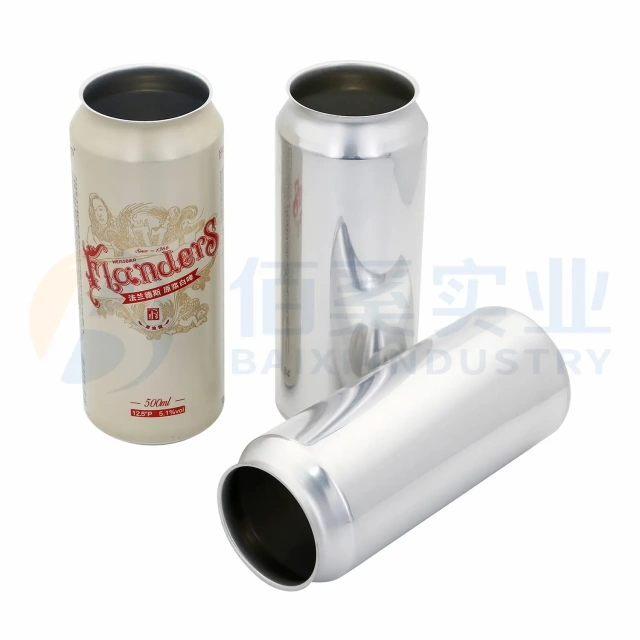
 The process is made efficient by smart design software (such as Esko Studio). Using AI-based design software has reduced the time of pattern adjustment to the curved surface of the tank from 3 hours per pattern to 20 minutes, and printing the color gamut above the limit issue is automatically detected (the error ratio has been reduced from 12% to 0.5%). During Red Bull's 2023 international campaign, 500 regionally limited designs were produced by this tool. From concept to mass production in 10 days alone (while the traditional process takes 30 days), at a savings cost of 1.2 million US dollars (Source: Esko user Success stories).
Post-press processes deliver added value. Laser engraving (accurate to 0.02mm) can engrave micro-textures on the body of the can (which increases the tactile identification rate by 70%). The cost of an individual can is increased by 0.15 US dollars, but the resale premium for limited issues can be up to 200% (for example, the Budweiser Star Wars themed can is purchased and sold for 25 US dollars per can on eBay). UV local varnishing (with a varnish thickness of 10μm) increases the reflectivity of single patterns by 60%. A particular energy drink's actual test verifies that attention span on the shelf has been extended to 7 seconds from 3 seconds, and the conversion rate has been increased by 22% (Source: Lab data for packaging testing).
Cost-and-benefit analysis suggests that the joint combination of digital printing (for short runs) + offset printing (for large runs) + flexographic printing (environment friendly) can reduce the overall cost of production between 12% and 25%. For instance, one of the new beverage brand printed 2,000 cans for its first order (with digital printing). Once it was a hit, it switched to offset printing and increased the print quantity to 50,000 cans. The cost unit decreased from 0.8 US dollars to 0.35 US dollars, and the annual profit margin increased by 18%.
The direction of the industry tends towards intelligence and sustainability. According to the "Smithers 2024 Forecast", by 2025 75% of cans printed worldwide will employ digital printing or flexographic printing technologies and 30% of the inks will be replaced with bio-based materials (with prices increasing by 8%-12%, but the premium capacity being up by 15%). It is recommended that companies give priority to selecting ISO 12647-2-certified printers and that the tank coating should be in compliance with the FDA direct contact requirement (21 CFR 175.300) in order to avoid compliance hazards (e.g., recall cost due to excessive migration, which can reach 500,000 US dollars per one-time incident).
The process is made efficient by smart design software (such as Esko Studio). Using AI-based design software has reduced the time of pattern adjustment to the curved surface of the tank from 3 hours per pattern to 20 minutes, and printing the color gamut above the limit issue is automatically detected (the error ratio has been reduced from 12% to 0.5%). During Red Bull's 2023 international campaign, 500 regionally limited designs were produced by this tool. From concept to mass production in 10 days alone (while the traditional process takes 30 days), at a savings cost of 1.2 million US dollars (Source: Esko user Success stories).
Post-press processes deliver added value. Laser engraving (accurate to 0.02mm) can engrave micro-textures on the body of the can (which increases the tactile identification rate by 70%). The cost of an individual can is increased by 0.15 US dollars, but the resale premium for limited issues can be up to 200% (for example, the Budweiser Star Wars themed can is purchased and sold for 25 US dollars per can on eBay). UV local varnishing (with a varnish thickness of 10μm) increases the reflectivity of single patterns by 60%. A particular energy drink's actual test verifies that attention span on the shelf has been extended to 7 seconds from 3 seconds, and the conversion rate has been increased by 22% (Source: Lab data for packaging testing).
Cost-and-benefit analysis suggests that the joint combination of digital printing (for short runs) + offset printing (for large runs) + flexographic printing (environment friendly) can reduce the overall cost of production between 12% and 25%. For instance, one of the new beverage brand printed 2,000 cans for its first order (with digital printing). Once it was a hit, it switched to offset printing and increased the print quantity to 50,000 cans. The cost unit decreased from 0.8 US dollars to 0.35 US dollars, and the annual profit margin increased by 18%.
The direction of the industry tends towards intelligence and sustainability. According to the "Smithers 2024 Forecast", by 2025 75% of cans printed worldwide will employ digital printing or flexographic printing technologies and 30% of the inks will be replaced with bio-based materials (with prices increasing by 8%-12%, but the premium capacity being up by 15%). It is recommended that companies give priority to selecting ISO 12647-2-certified printers and that the tank coating should be in compliance with the FDA direct contact requirement (21 CFR 175.300) in order to avoid compliance hazards (e.g., recall cost due to excessive migration, which can reach 500,000 US dollars per one-time incident).
What’s the best method for customizing printed cans?
The crux of the technology of personalizing printed cans lies in the marriage of flexographic printing and digital printing. The digital printing (e.g., HP Indigo) supports small batches (with a minimum order quantity of 500 cans), ±0.1mm printing precision (industry norm ±0.3mm), 1200dpi resolution, and can accurately reproduce high-complexity gradient designs (e.g., metallic texture gradients). A craft beer brand placed custom limited edition cans in digital printing (the price per can is $0.8, but the old offset printing technology is $0.5 yet the minimum order of 5,000 cans). After it was launched, its sales increased by 45%, premium rate reached 30% (data source: "2023 Packaging Industry Trends Report").
Offset Printing technology has enormous cost savings when there are long-run orders. For instance, 330ml aluminum cans. The cost of an offset printing can is only 0.3 US dollars (more than 10,000 cans), the color fidelity ΔE≤2 (for digital printing ΔE≤1.5), and the printing speed can reach up to 8,000 cans per hour. The limited edition cans for holidays that Coca-Cola released in 2022 (85% of the printing area) were printed by offset printing. The manufacturing time was reduced from 7 to 3 days. The ink adhesion exceeded 500 times of friction (the standard demand was 300 times), and the rate of return was as low as 0.2% (Source: Coca-Cola Supply Chain White Paper).
Flexo printing is running extremely well on eco-materials. The VOC emission of water-based ink flexographic printing presses (e.g., Mark Andy) is 90% lower than the solvent-based inks (≤50g/m³), which is compliant with the EU REACH regulation. Flexographic printing and biodegradable coating (PLA) have been utilized by some brand of organic juice for its cans, reducing its carbon footprint by 55%. After carbon neutral certification is attained, the customer repurchase rate has increased by 28% (Source: "Sustainable Packaging" 2023 Case study).
The process is made efficient by smart design software (such as Esko Studio). Using AI-based design software has reduced the time of pattern adjustment to the curved surface of the tank from 3 hours per pattern to 20 minutes, and printing the color gamut above the limit issue is automatically detected (the error ratio has been reduced from 12% to 0.5%). During Red Bull's 2023 international campaign, 500 regionally limited designs were produced by this tool. From concept to mass production in 10 days alone (while the traditional process takes 30 days), at a savings cost of 1.2 million US dollars (Source: Esko user Success stories).
Post-press processes deliver added value. Laser engraving (accurate to 0.02mm) can engrave micro-textures on the body of the can (which increases the tactile identification rate by 70%). The cost of an individual can is increased by 0.15 US dollars, but the resale premium for limited issues can be up to 200% (for example, the Budweiser Star Wars themed can is purchased and sold for 25 US dollars per can on eBay). UV local varnishing (with a varnish thickness of 10μm) increases the reflectivity of single patterns by 60%. A particular energy drink's actual test verifies that attention span on the shelf has been extended to 7 seconds from 3 seconds, and the conversion rate has been increased by 22% (Source: Lab data for packaging testing).
Cost-and-benefit analysis suggests that the joint combination of digital printing (for short runs) + offset printing (for large runs) + flexographic printing (environment friendly) can reduce the overall cost of production between 12% and 25%. For instance, one of the new beverage brand printed 2,000 cans for its first order (with digital printing). Once it was a hit, it switched to offset printing and increased the print quantity to 50,000 cans. The cost unit decreased from 0.8 US dollars to 0.35 US dollars, and the annual profit margin increased by 18%.
The direction of the industry tends towards intelligence and sustainability. According to the "Smithers 2024 Forecast", by 2025 75% of cans printed worldwide will employ digital printing or flexographic printing technologies and 30% of the inks will be replaced with bio-based materials (with prices increasing by 8%-12%, but the premium capacity being up by 15%). It is recommended that companies give priority to selecting ISO 12647-2-certified printers and that the tank coating should be in compliance with the FDA direct contact requirement (21 CFR 175.300) in order to avoid compliance hazards (e.g., recall cost due to excessive migration, which can reach 500,000 US dollars per one-time incident).
The process is made efficient by smart design software (such as Esko Studio). Using AI-based design software has reduced the time of pattern adjustment to the curved surface of the tank from 3 hours per pattern to 20 minutes, and printing the color gamut above the limit issue is automatically detected (the error ratio has been reduced from 12% to 0.5%). During Red Bull's 2023 international campaign, 500 regionally limited designs were produced by this tool. From concept to mass production in 10 days alone (while the traditional process takes 30 days), at a savings cost of 1.2 million US dollars (Source: Esko user Success stories).
Post-press processes deliver added value. Laser engraving (accurate to 0.02mm) can engrave micro-textures on the body of the can (which increases the tactile identification rate by 70%). The cost of an individual can is increased by 0.15 US dollars, but the resale premium for limited issues can be up to 200% (for example, the Budweiser Star Wars themed can is purchased and sold for 25 US dollars per can on eBay). UV local varnishing (with a varnish thickness of 10μm) increases the reflectivity of single patterns by 60%. A particular energy drink's actual test verifies that attention span on the shelf has been extended to 7 seconds from 3 seconds, and the conversion rate has been increased by 22% (Source: Lab data for packaging testing).
Cost-and-benefit analysis suggests that the joint combination of digital printing (for short runs) + offset printing (for large runs) + flexographic printing (environment friendly) can reduce the overall cost of production between 12% and 25%. For instance, one of the new beverage brand printed 2,000 cans for its first order (with digital printing). Once it was a hit, it switched to offset printing and increased the print quantity to 50,000 cans. The cost unit decreased from 0.8 US dollars to 0.35 US dollars, and the annual profit margin increased by 18%.
The direction of the industry tends towards intelligence and sustainability. According to the "Smithers 2024 Forecast", by 2025 75% of cans printed worldwide will employ digital printing or flexographic printing technologies and 30% of the inks will be replaced with bio-based materials (with prices increasing by 8%-12%, but the premium capacity being up by 15%). It is recommended that companies give priority to selecting ISO 12647-2-certified printers and that the tank coating should be in compliance with the FDA direct contact requirement (21 CFR 175.300) in order to avoid compliance hazards (e.g., recall cost due to excessive migration, which can reach 500,000 US dollars per one-time incident).