 International standards vary significantly. Eu EN10346 stipulates that the tolerance of commercial coil weight is ±8%, while ASTM A653 in the United States allows a deviation of ±10%. Case of a certain export enterprise: The 22-ton steel coil sent to Germany was measured to be 21.1 tons (with a deviation of 4.1%) and cleared customs smoothly, but the 21.3-ton coil of the same batch from the US was rejected because it was measured to be 19.2 tons (with a deviation of 9.9%). Emerging markets have more special requirements: The maximum permitted roll weight of the IS 277 standard in India is up to 35 tons, which is 17% higher than the standards in Europe and America.
Intelligent production enhances precision control. Modern galvanizing lines adopt an automatic thickness control system (AGC), in conjunction with a gamma-ray thickness gauge (with an accuracy of ±0.001mm), to compress the substrate thickness deviation to ±3%. Data from Ansteel shows that the actual tolerance of 1.0mm thick products is controlled within ±0.03mm, and the fluctuation range of single coil weight is narrowed to ±0.8%. The laser speed detector (with an accuracy of ±0.1m/min) is linked with the tension control for coiling (ranging from 5 to 80kN), ensuring that the interlayer gap of the steel coil is ≤0.05mm, eliminating the weight inaccuracy caused by traditional coiling shape defects.
The economic model drives the optimal roll weight. The cost analysis of the steel plant shows that the energy consumption for melting and casting 30-ton coils is 28 yuan per ton lower than that for 15-ton coils, but for exceeding 25 tons, the power of the coiler needs to be increased to 4,500KW (an additional equipment investment of 18 million yuan). Dynamic changes in the optimal market solution: When the Shanghai zinc futures price fluctuates by 18% in 2024, galvanizing enterprises will adjust the standard coil weight from 22 tons to 19 tons, reducing the raw material inventory cost by ¥41 per ton. The intelligent logistics system dynamically matches the weight of the rolls with the load of the vehicles through RFID (with an identification accuracy of 99.99%), precisely controlling the transportation cost difference at 0.15 yuan per ton per kilometer.
International standards vary significantly. Eu EN10346 stipulates that the tolerance of commercial coil weight is ±8%, while ASTM A653 in the United States allows a deviation of ±10%. Case of a certain export enterprise: The 22-ton steel coil sent to Germany was measured to be 21.1 tons (with a deviation of 4.1%) and cleared customs smoothly, but the 21.3-ton coil of the same batch from the US was rejected because it was measured to be 19.2 tons (with a deviation of 9.9%). Emerging markets have more special requirements: The maximum permitted roll weight of the IS 277 standard in India is up to 35 tons, which is 17% higher than the standards in Europe and America.
Intelligent production enhances precision control. Modern galvanizing lines adopt an automatic thickness control system (AGC), in conjunction with a gamma-ray thickness gauge (with an accuracy of ±0.001mm), to compress the substrate thickness deviation to ±3%. Data from Ansteel shows that the actual tolerance of 1.0mm thick products is controlled within ±0.03mm, and the fluctuation range of single coil weight is narrowed to ±0.8%. The laser speed detector (with an accuracy of ±0.1m/min) is linked with the tension control for coiling (ranging from 5 to 80kN), ensuring that the interlayer gap of the steel coil is ≤0.05mm, eliminating the weight inaccuracy caused by traditional coiling shape defects.
The economic model drives the optimal roll weight. The cost analysis of the steel plant shows that the energy consumption for melting and casting 30-ton coils is 28 yuan per ton lower than that for 15-ton coils, but for exceeding 25 tons, the power of the coiler needs to be increased to 4,500KW (an additional equipment investment of 18 million yuan). Dynamic changes in the optimal market solution: When the Shanghai zinc futures price fluctuates by 18% in 2024, galvanizing enterprises will adjust the standard coil weight from 22 tons to 19 tons, reducing the raw material inventory cost by ¥41 per ton. The intelligent logistics system dynamically matches the weight of the rolls with the load of the vehicles through RFID (with an identification accuracy of 99.99%), precisely controlling the transportation cost difference at 0.15 yuan per ton per kilometer.
What’s the standard coil weight for Galvanized plate?
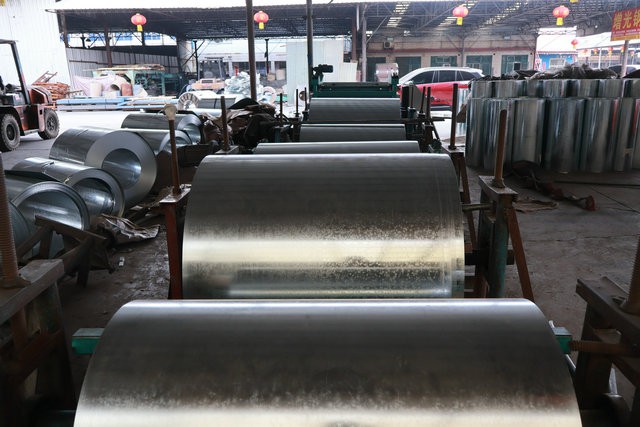
The standard weight of Galvanized steel coils is mainly affected by the thickness, width of the base plate and the specification of the zinc coating. According to the JIS G3302 standard, the designed weight of a single coil of Galvanized steel plate with a commonly used thickness of 0.3-3.0mm is concentrated in the range of 5-30 tons. Typical automotive sheet production line data shows that when the product is 1.2mm thick ×1250mm wide, with an inner diameter of 610mm and an outer diameter of 1500mm, the net weight of the steel coil is approximately 22.5 tons (zinc coating Z60 grade), and the base material density is taken as 7.85g/cm³. Statistics from Baosteel's production line show that different zinc coating weights (60-275g/m²) can cause fluctuations in coil weight by ±3.7%. When exceeding the Z120 specification, an additional 6.2% weight allowance should be reserved to prevent coil collapse.
The logistics transportation parameters determine the upper limit of the economic roll weight. The maximum load capacity of sea freight containers is 21.7 tons (40-foot high containers), and the weight limit for land transport semi-trailers is 32 tons. A case of supply chain optimization for a certain home appliance enterprise shows that when using 24-ton standard rolls, the single transportation capacity utilization rate reaches 98.2%, and the annual logistics cost is 37% lower than that of 15-ton small rolls. Port handling data confirm that for steel coils with an outer diameter of 1800mm, a lifting electromagnet of ≥10 tons (with an adsorption force of 1.8N/cm²) is required, while for 1500mm outer diameter coils, a 7-ton equipment can be used for operation.
The efficiency of uncoiling processing is strongly related to the roll weight. The actual measurement on the production line shows that the frequency of changing 30-ton rolls is 53% lower than that of 15-ton rolls, and the effective operation time of the production line increases to 86%. However, it is necessary to match the load-bearing capacity of the uncoiler: for steel coils with a thickness of 1.5mm or more, the back support roller of the equipment is required to bear a pressure of ≥60MPa. After Midea Group renovated its production line in 2023, the feeding time for 25-ton rolls was reduced to 12 minutes per roll, and the material loss rate dropped from 0.8% to 0.4%, saving over 2 million yuan in costs annually.
International standards vary significantly. Eu EN10346 stipulates that the tolerance of commercial coil weight is ±8%, while ASTM A653 in the United States allows a deviation of ±10%. Case of a certain export enterprise: The 22-ton steel coil sent to Germany was measured to be 21.1 tons (with a deviation of 4.1%) and cleared customs smoothly, but the 21.3-ton coil of the same batch from the US was rejected because it was measured to be 19.2 tons (with a deviation of 9.9%). Emerging markets have more special requirements: The maximum permitted roll weight of the IS 277 standard in India is up to 35 tons, which is 17% higher than the standards in Europe and America.
Intelligent production enhances precision control. Modern galvanizing lines adopt an automatic thickness control system (AGC), in conjunction with a gamma-ray thickness gauge (with an accuracy of ±0.001mm), to compress the substrate thickness deviation to ±3%. Data from Ansteel shows that the actual tolerance of 1.0mm thick products is controlled within ±0.03mm, and the fluctuation range of single coil weight is narrowed to ±0.8%. The laser speed detector (with an accuracy of ±0.1m/min) is linked with the tension control for coiling (ranging from 5 to 80kN), ensuring that the interlayer gap of the steel coil is ≤0.05mm, eliminating the weight inaccuracy caused by traditional coiling shape defects.
The economic model drives the optimal roll weight. The cost analysis of the steel plant shows that the energy consumption for melting and casting 30-ton coils is 28 yuan per ton lower than that for 15-ton coils, but for exceeding 25 tons, the power of the coiler needs to be increased to 4,500KW (an additional equipment investment of 18 million yuan). Dynamic changes in the optimal market solution: When the Shanghai zinc futures price fluctuates by 18% in 2024, galvanizing enterprises will adjust the standard coil weight from 22 tons to 19 tons, reducing the raw material inventory cost by ¥41 per ton. The intelligent logistics system dynamically matches the weight of the rolls with the load of the vehicles through RFID (with an identification accuracy of 99.99%), precisely controlling the transportation cost difference at 0.15 yuan per ton per kilometer.
International standards vary significantly. Eu EN10346 stipulates that the tolerance of commercial coil weight is ±8%, while ASTM A653 in the United States allows a deviation of ±10%. Case of a certain export enterprise: The 22-ton steel coil sent to Germany was measured to be 21.1 tons (with a deviation of 4.1%) and cleared customs smoothly, but the 21.3-ton coil of the same batch from the US was rejected because it was measured to be 19.2 tons (with a deviation of 9.9%). Emerging markets have more special requirements: The maximum permitted roll weight of the IS 277 standard in India is up to 35 tons, which is 17% higher than the standards in Europe and America.
Intelligent production enhances precision control. Modern galvanizing lines adopt an automatic thickness control system (AGC), in conjunction with a gamma-ray thickness gauge (with an accuracy of ±0.001mm), to compress the substrate thickness deviation to ±3%. Data from Ansteel shows that the actual tolerance of 1.0mm thick products is controlled within ±0.03mm, and the fluctuation range of single coil weight is narrowed to ±0.8%. The laser speed detector (with an accuracy of ±0.1m/min) is linked with the tension control for coiling (ranging from 5 to 80kN), ensuring that the interlayer gap of the steel coil is ≤0.05mm, eliminating the weight inaccuracy caused by traditional coiling shape defects.
The economic model drives the optimal roll weight. The cost analysis of the steel plant shows that the energy consumption for melting and casting 30-ton coils is 28 yuan per ton lower than that for 15-ton coils, but for exceeding 25 tons, the power of the coiler needs to be increased to 4,500KW (an additional equipment investment of 18 million yuan). Dynamic changes in the optimal market solution: When the Shanghai zinc futures price fluctuates by 18% in 2024, galvanizing enterprises will adjust the standard coil weight from 22 tons to 19 tons, reducing the raw material inventory cost by ¥41 per ton. The intelligent logistics system dynamically matches the weight of the rolls with the load of the vehicles through RFID (with an identification accuracy of 99.99%), precisely controlling the transportation cost difference at 0.15 yuan per ton per kilometer.